
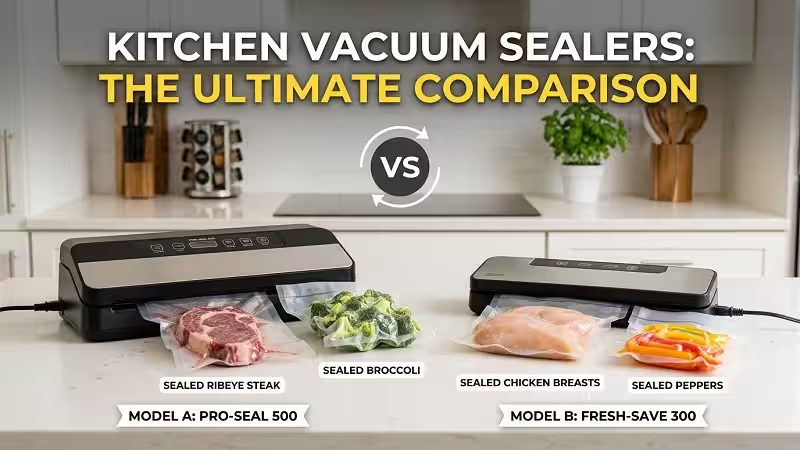
 You dig through the freezer and find a gray, frosty steak. Ugh. That dinner just turned into wasted money. Freezer burn hits every American kitchen sooner or later, and a good vacuum sealer stops it fast.
So which machine should you buy? That question sparks the FoodSaver vs NutriChef debate. FoodSaver is the household name most of us know. NutriChef, meanwhile, is the low-priced challenger that keeps popping up in online searches. Both promise fresher food and fewer trips to the store. However, they take very different paths to get there.
In this guide, I break down the FoodSaver vs NutriChef question in plain English. If you are still exploring overall options, make sure to check out our complete guide on the best vacuum sealers for home use to see how broader models stack up. Along the way, we will find the best budget vacuum sealer for your home. Ready to save some food and some cash? Let’s dive in.
Table of Contents
1. FoodSaver vs NutriChef: Quick Comparison Table
Before we dig into the details, here is a quick side-by-side snapshot of how the flagship budget models from both brands measure up against each other.
| Check Price | Model Name | Best For | Warranty | Key Advantage |
|---|---|---|---|---|
| Check Price on Amazon | FoodSaver FM2000 | Heavy-duty & frequent long-term sealing | 5-Year Limited | Extra-wide heat seal, proven brand durability |
| Check Price on Amazon | NutriChef PKVS18BK | Budget beginners & small apartment kitchens | 1-Year Limited | Includes full starter kit, dry/moist modes |
2. FoodSaver vs NutriChef: Brand Overviews
Before we dig into the details, let’s meet the two brands. A little background makes this FoodSaver vs NutriChef match-up easier to follow.
2.1 Who Is FoodSaver?
FoodSaver is the legacy name in home vacuum sealing. Families have trusted it for decades, and plenty of US kitchens still own one. You can find it at big-box stores, home goods shops, and online. Thanks to that wide reach, bags and replacement parts are easy to grab. The brand also offers many models, from basic units to feature-packed ones. Still, the price tag usually runs higher than most budget rivals.
2.2 Who Is NutriChef?
NutriChef plays a different game. This value brand sells mostly online and keeps its prices low. As a result, it attracts first-time buyers who just want to try vacuum sealing. The lineup includes several PKVS models, so shoppers have plenty of choices. Yet the brand has a smaller presence in physical stores, which can make support feel less personal.
2.3 Quick Snapshot: Who Should Buy Which?
- Choose FoodSaver if you seal food every week and want a machine built for the long haul.
- Choose NutriChef if you are new to sealing and want to keep costs down.
- Still unsure? Keep reading, because the details matter.
3. FoodSaver Vacuum Sealer Review: FM2000 Up Close
Let’s start with the legacy brand. This FoodSaver vacuum sealer review focuses on the FM2000, a popular model in many US kitchens.
3.1 Suction Power and Build Quality
The FM2000 feels solid the moment you pick it up. The lid locks down with a firm click, and the body does not creak or flex. Moreover, the sealing strip is wide, which helps create tight, even seals. In my experience, that consistency matters most when you freeze meat for months. Suction pulls air out fast on dry foods like chicken breasts, deli meats, and cheese. The power is steady rather than flashy, but it handles daily jobs well.
3.2 Ease of Use and Starter Kit
Simple controls make this machine friendly for beginners. You press a button, wait a few seconds, and the sealer finishes the job. Many FM2000 bundles also include a handheld sealer, so you can protect jars and zipper bags too. Starter bags and rolls often come in the box, though contents vary by retailer. Because of that, check the product listing before you buy. Built-in roll storage and a bag cutter also keep your counter tidy.
3.3 Noise, Storage, and Extras
Expect the usual vacuum-sealer hum. It is loud, but it only lasts a few seconds. The unit also takes up real counter space, so measure your shelf first. Finally, check whether your version includes a drip tray, since that feature differs across FoodSaver models.
Check FoodSaver FM2000 Price on Amazon
4. NutriChef PKVS Review: The Budget Challenger
Now let’s meet the challenger. This NutriChef vs FoodSaver comparison starts with the PKVS line, which is NutriChef’s most popular series for home cooks.
4.1 Suction Power and Everyday Performance
For the price, the PKVS series does a solid job. It pulls air from dry foods like nuts, cheese, and cooked meats without much fuss. Seals look neat on most bags, and the unit works well for weekly meal prep. However, the motor can feel less powerful when you seal bulky or oddly shaped items. Longer runs may also warm the machine up, so give it short breaks between batches. Still, casual users will likely never notice these limits.
4.2 Ease of Use and Included Accessories
Setup takes just a few minutes. Most PKVS kits come with a starter set of bags and a basic bag cutter. In addition, many bundles include a hose for sealing canisters or containers. The buttons are simple, but the learning curve is a bit steeper than FoodSaver’s. For example, you may need a few tries to line up the bag edge just right. After that, sealing becomes second nature.
4.3 Model Variations in the PKVS Line
NutriChef sells several PKVS models, and features change from one to the next. Some add extra modes, while others skip them to save money. Because of this, compare listings carefully before you click “buy.” Otherwise, you may pay for features you will never use.
Check NutriChef PKVS18BK Price on Amazon
5. FoodSaver FM2000: Pros and Cons
Every machine has strengths and flaws. Here is the honest breakdown for the legacy brand in this FoodSaver vs NutriChef match-up.
 5.1 What We Like About FoodSaver
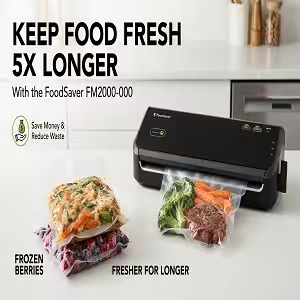 5.1 What We Like About FoodSaver
- Strong, even seals: The extra-wide sealing strip creates tight seals that hold up in the freezer.
- Long warranty: Retail packaging lists a five-year limited warranty, which adds real peace of mind.
- Beginner-friendly controls: One touch starts the job, so you never need a manual.
- Handy extras: An accessory hose lets you seal jars and containers too.
- Easy bag access: Built-in roll storage and a cutter keep prep fast and tidy.
5.2 What Could Be Better
- Higher price: The starter system runs about $112, so it is not the cheapest option.
- Bulky footprint: The unit needs real counter or shelf space.
- Brand-bag habit: Many owners stick with FoodSaver bags, which can raise long-term costs.
- Varying bundles: Box contents change by retailer, so read each listing closely.
Check FoodSaver FM2000 Price on Amazon
6. NutriChef PKVS: Pros and Cons
Now let’s flip the coin. This NutriChef vs FoodSaver comparison looks at what the budget challenger does right and wrong.
6.1 Why NutriChef Wins Fans
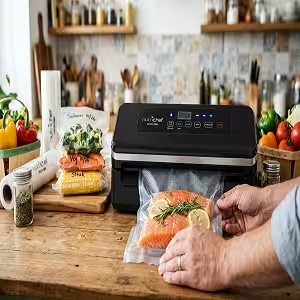 6.1 Why NutriChef Wins Fans
- Low price: The PKVS18BK sells for about $59 at Walmart, roughly half the FoodSaver’s cost.
- Generous starter kit: One PKVS kit includes five bags, a bag roll, a wine stopper, and a vacuum hose.
- Moist food setting: Some PKVS listings advertise dry and moist food modes.
- Slim and light: At about 14 inches long and under three pounds, it slides into a drawer easily.
- Great for beginners: You can test the habit without a big investment.
6.2 Where NutriChef Falls Short
- Shorter warranty: Most listings show one year, versus FoodSaver’s five.
- Modest suction: An independent test measured about 33-45 kPa on dry foods, which is fine for casual use.
- Learning curve: Bag alignment takes a few tries.
- Model confusion: Features vary across the PKVS line, so compare listings carefully.
Check NutriChef PKVS18BK Price on Amazon
7. Best Budget Vacuum Sealer in Real Kitchens
Specs only tell half the story. So let’s see how each machine fits real life. This FoodSaver vs NutriChef test looks at three everyday problems.
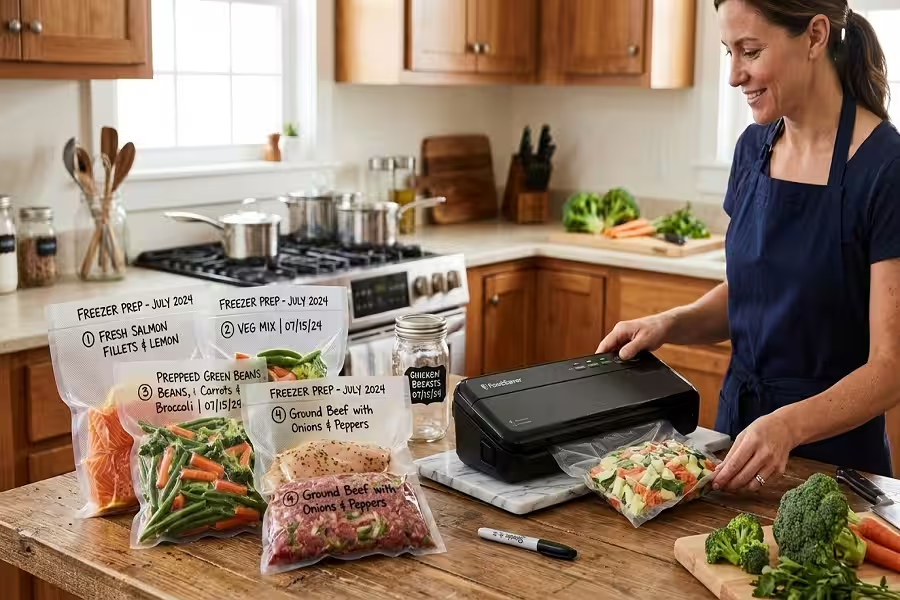
7.1 Wet Foods, Marinades, and Soups
Moisture is the toughest test for any sealer. Liquid can creep toward the seal bar and ruin the bond. Neither budget machine loves soups. In one independent test, the PKVS18BK pulled about 28-30 kPa on moist foods. That is workable, but you must go slowly. FoodSaver sells pricier models built for liquids, such as the Elite All-in-One Liquid Vacuum Sealer. For either budget unit, freeze soups first. Also, wipe the bag edge before sealing.
7.2 Small Kitchens and Apartment Meal Prep
Space matters in a tiny kitchen. The PKVS18BK measures about 14 inches long and 3 inches tall, so it tucks into a drawer. Meanwhile, the FM2000 is bigger. One review lists it at roughly 16 inches wide and 9 inches deep. It fits on a counter, but it needs a real spot. Apartment preppers who value storage will likely lean toward NutriChef.
7.3 Bag Costs and Long-Term Upkeep
Bags are the hidden cost of any sealer. NutriChef sells rolls too, such as 100 feet of 8-inch bags for about $23. Generic rolls often work in external sealers. Still, test a few seals before you buy in bulk. FoodSaver bags are easy to find, though they can cost more per foot.
8. My Expert Take: Legacy Brand vs Budget Kit
Here is my honest view on the FoodSaver vs NutriChef debate. The right pick depends on two things: how often you seal and how long you plan to keep the machine. Price alone never tells the whole story.
8.1 The Case for Long-Term, Heavy Use
If you seal every week, buy meat in bulk, or freeze garden harvests, I lean toward FoodSaver. A busy machine needs steady seals, easy-to-find parts, and solid coverage. FoodSaver’s five-year limited warranty and wide store presence support that need. In other words, you pay more upfront to worry less later.
8.2 The Case for a Budget Starter Kit
Not everyone seals that often. If you are curious, cook for one, or want to test the habit, NutriChef makes sense. At about $59, a wrong guess costs little. Plus, the starter kit lets you seal the day it arrives. If the habit sticks, you can upgrade later.
8.3 Think in Cost Per Year
Try this simple math. Say a $112 FoodSaver lasts five years. That works out to about $22 a year. A $59 NutriChef that lasts two years costs about $30 a year. Those lifespans are examples, not promises. Still, the idea holds: a cheap machine that dies early can cost more over time. Yet a cheap machine you use twice a year is still a bargain.
8.4 My Rule of Thumb
Seal more than twice a month? Go with FoodSaver. Seal less often? Start with NutriChef. For most beginners, that is the best budget vacuum sealer path.
9. FAQ: FoodSaver vs NutriChef Answered
Still weighing your options? These quick answers cover the questions shoppers ask most about FoodSaver vs NutriChef.
9.1 Which brand is better for long-term food storage and heavy use?
FoodSaver is my pick for heavy users. It offers a five-year limited warranty and steady, even seals. Those traits matter when you freeze food for months. For best results, always follow the official USDA Safe Food Storage Guidelines.
9.2 Can NutriChef handle moist or wet foods effectively?
Somewhat. Some PKVS listings advertise dry and moist food modes. Even so, wet foods stay tricky for any budget sealer. Freeze soups and marinades first. Then wipe the bag edge before you seal. These steps protect the seal and your machine.
9.3 Are expensive brand-name bags required for these vacuum sealers?
Not always. Many external sealers accept generic rolls, and NutriChef sells its own, such as 100 feet of 8-inch bags for about $23. Still, test a few seals before you buy in bulk. A bag must fit your machine’s channel and hold air out.
9.4 Which machine is better for small kitchens and apartment preppers?
NutriChef wins here. The PKVS18BK measures about 14 inches long and 3 inches tall, so it slides into a drawer. The FM2000 is bulkier and needs a dedicated spot. Tight on space? Start with NutriChef.
9.5 How long do these budget vacuum sealers typically last?
I found no verified lifespan data for either brand. Use depends on how often you seal. Warranties offer a loose hint, since FoodSaver lists five years and NutriChef often lists one year. To extend life, give the motor short breaks and keep the gaskets clean.
9.6 Do both machines include starter accessory kits in the box?
Yes, though contents vary. FoodSaver bundles often include bags plus an accessory hose. One NutriChef kit includes five bags, a bag roll, a wine stopper, and a hose. Always read the listing for your exact model.
9.7 Is FoodSaver worth the higher price tag compared to NutriChef?
It depends on your habits. Frequent sealers gain value from the longer warranty and steady seals. Casual users may never use those perks. If you seal only now and then, NutriChef is the smarter buy.
10. Final Verdict: FoodSaver vs NutriChef
So, who wins the FoodSaver vs NutriChef showdown? The answer depends on you.
Seal food every week? Pick the FoodSaver FM2000. Its sturdy build, easy controls, and five-year limited warranty reward frequent use. New to vacuum sealing or short on space? Choose NutriChef. At about $59, it is the best budget vacuum sealer for testing the habit.

Sarah Jenkins is a kitchen gear enthusiast and food preservation expert who tests and reviews containers, vacuum sealers, and home organization tools to help families keep their food fresh.
Pingback: Best Food Dehydrators for Beginners