
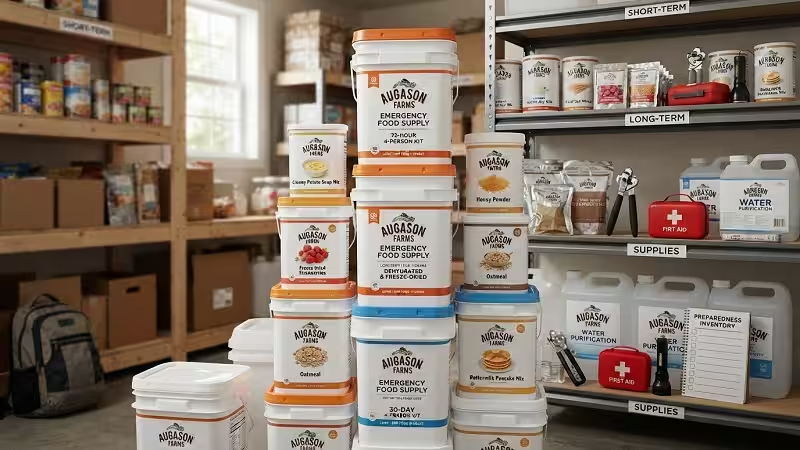
Wildfires, hurricanes, winter storms, and supply chain hiccups have all reminded Americans of one simple truth: grocery store shelves aren’t guaranteed to stay full. In fact, a quick trip to any store during a regional emergency shows just how fast bread, water, and canned goods disappear. Consequently, more households are turning to long-term food storage as a practical safety net rather than a fringe hobby. Emergency preparedness has moved from bunker stereotypes into mainstream kitchen planning, and pre-made kits are leading that shift.
That’s where Augason Farms comes in. This brand has built a strong reputation among preppers, homesteaders, and everyday families who simply want peace of mind. However, not every kit lives up to its marketing claims, so it pays to look closely before buying. This Augason Farms emergency kit review digs into what you actually get for your money, from taste and nutrition to shelf life and real-world value. Whether you’re comparing the best Augason Farms food kits or wondering if an Augason Farms 30-day emergency food supply fits your household, you’ll find clear answers ahead. By the end, you’ll know exactly whether this popular brand deserves a spot in your pantry.
2. What Is Augason Farms? A Quick Brand Overview
Augason Farms has been producing shelf-stable food since 1972, making it one of the longest-running names in emergency food storage. Based in Utah, the company built its reputation on freeze-dried and dehydrated staples long before “prepping” became a mainstream trend. Today, it sells everything from single #10 cans of powdered milk to massive 30-day emergency buckets designed to feed entire families.
What sets this brand apart is its sheer product range. You can buy individual ingredients for DIY meal planning, or you can grab a complete kit that requires zero guesswork. This flexibility explains why Augason Farms consistently ranks among the best Augason Farms food kits available to everyday consumers, not just hardcore survivalists.
Additionally, the company sells through major retailers like Walmart, Costco, and Amazon, which adds a layer of trust that smaller prepper brands simply can’t match. That accessibility, combined with decades of manufacturing experience, gives Augason Farms real credibility. Therefore, when evaluating emergency food options, reading an Augason Farms Emergency Kit Review is almost always part of the conversation.
3. Augason Farms Emergency Kit Review: What’s Actually Inside
3.1 Breakfast, Lunch, and Dinner Entrée Variety
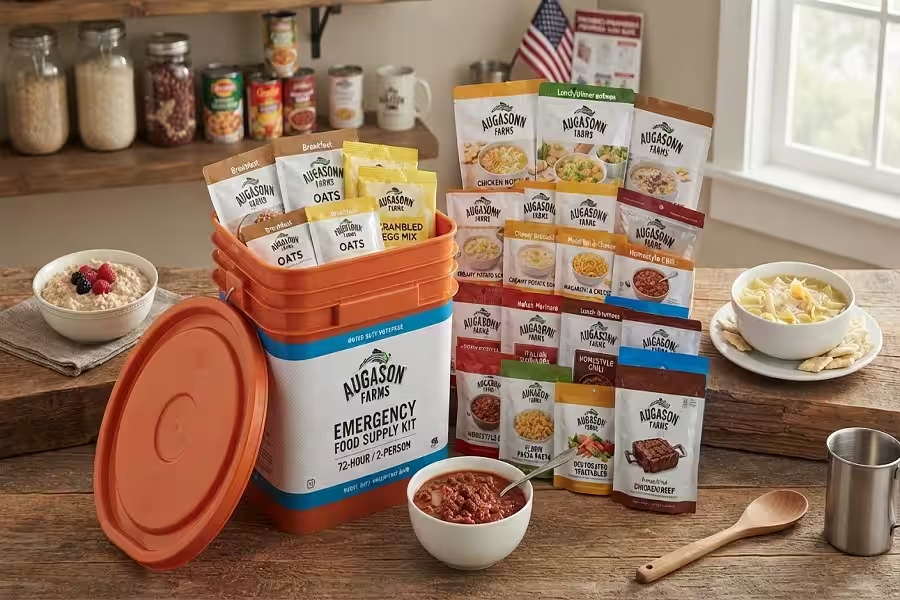
Most Augason Farms kits pack in a genuinely wide rotation of meals, so you’re not eating the same bland dish every day. Breakfast options typically include items like scrambled egg mix, oatmeal, and pancake mix. Lunch and dinner entrées lean heavily on pasta dishes, rice-based meals, and hearty soups, such as creamy potato soup or chili macaroni. Each entrée is freeze-dried or dehydrated, then sealed for long-term storage.
Furthermore, the variety helps prevent the “food fatigue” that plagues cheaper emergency kits. Many buyers specifically praise this rotation when searching for the best Augason Farms food kits online, since monotony is a real complaint with competing brands.
3.2 Beverages, Snacks, and Extras Included
Beyond entrées, kits usually include powdered beverages like milk alternatives, fruit drink mixes, and sometimes hot cocoa. Snack items such as fruit slices or pudding mixes occasionally appear in larger bundles, adding a small morale boost during stressful situations.
However, don’t expect gourmet extras. These are functional, calorie-dense additions meant to round out nutrition rather than impress dinner guests. Overall, the contents strike a reasonable balance between practicality and variety, which matters most when you’re relying on stored food for weeks at a time.
4. Augason Farms 30-Day Emergency Food Supply: Calories and Nutrition Breakdown
So, how many calories does an Augason Farms 30-day emergency food supply actually provide? On average, these buckets deliver roughly 1,800 to 2,000 calories per day, which lands close to standard adult recommendations during a crisis. That said, calorie counts vary depending on the specific kit and bucket size, so it’s worth checking the label before assuming exact numbers.
Macronutrient-wise, the meals lean carbohydrate-heavy, which makes sense given the reliance on pasta, rice, and oats as base ingredients. Protein comes primarily from powdered milk, beans, and occasional freeze-dried meat additions in premium kits. Fat content stays relatively low, which is typical for shelf-stable emergency food since fats reduce shelf life.
Compared to FEMA and Ready.gov general guidelines, which suggest planning for at least 2,000 calories per person daily during emergencies, Augason Farms kits sit right around that baseline rather than exceeding it. Consequently, larger adults, teenagers, or highly active households may need to supplement with extra snacks or a second kit. Smaller adults or sedentary situations, on the other hand, will likely find the calorie count perfectly sufficient for sustained energy during an emergency.
5. Taste Test and Cooking Experience: Do the Meals Hold Up?
5.1 Flavor and Texture Notes
Let’s be honest: nobody expects freeze-dried emergency food to taste like a restaurant meal. That said, Augason Farms performs better than many competitors in this department. Dishes like the creamy potato soup and chili macaroni receive consistently positive feedback for their seasoning and texture. Meanwhile, some breakfast items, particularly the scrambled egg mix, tend to divide opinions since the texture differs noticeably from fresh eggs.
Overall, most entrées rehydrate into a texture close to their fresh counterparts, though slightly softer. Seasoning leans mild, which actually works in the brand’s favor since you can easily add your own spices without fighting an overpowering flavor profile already baked in.
5.2 Ease of Preparation (Water-Only vs. Stovetop)
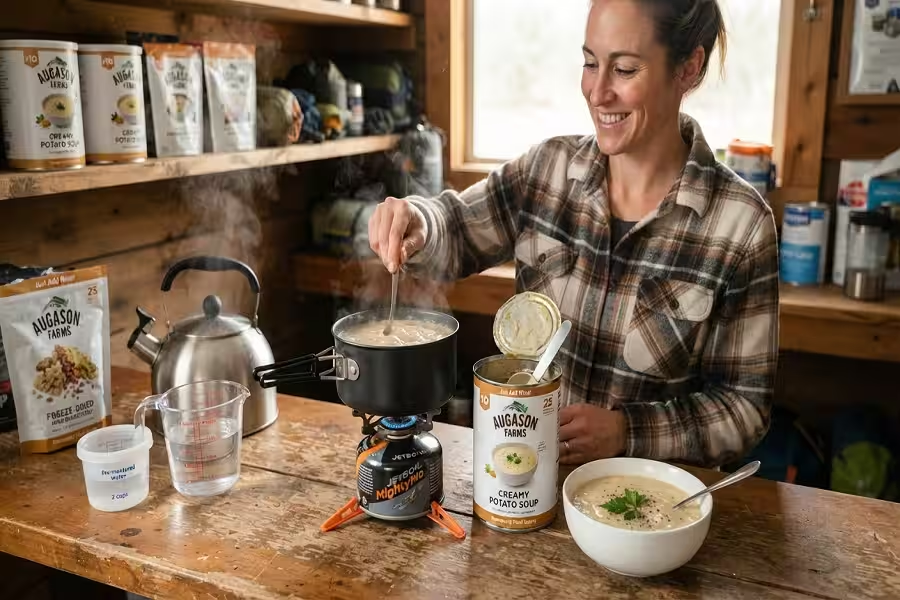
Preparation stays refreshingly simple across most products. The majority of meals require nothing more than boiling water and a short waiting period, typically 10 to 15 minutes. No specialized equipment or cooking skills are necessary, which makes these kits genuinely accessible for beginners.
Some dishes benefit from stovetop simmering for improved texture, though it’s optional rather than required. This water-only convenience becomes especially valuable during power outages when stovetops aren’t an option. Therefore, as highlighted in many an Augason Farms Emergency Kit Review, preparation simplicity is one of this brand’s strongest practical advantages.
6. Comparison Table: Popular Augason Farms Kits Side by Side
Choosing between options gets easier once you see the numbers laid out together. Below is a side-by-side comparison of some of the most popular Augason Farms kits, covering the details that matter most: calories, shelf life, variety, and overall price value.
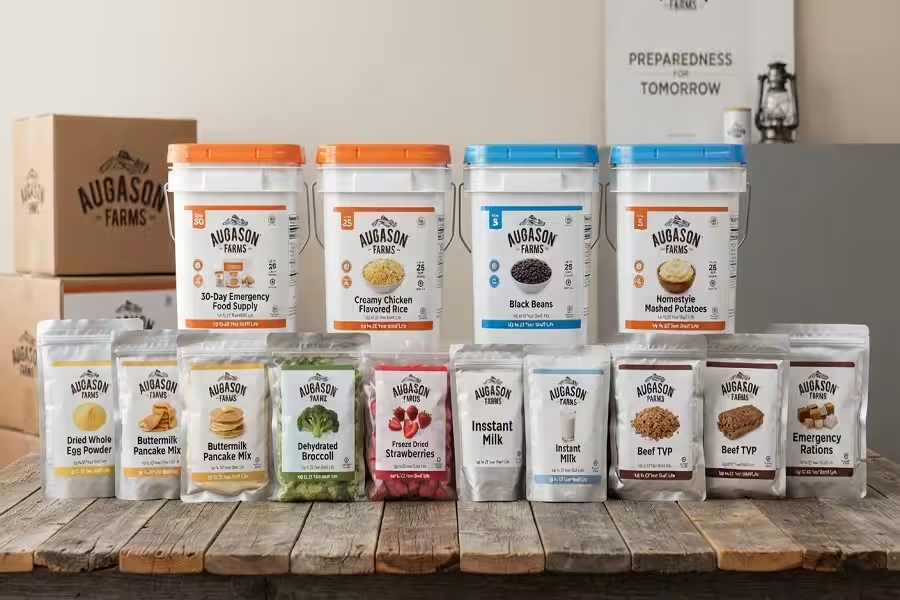
| Kit Name | Calories/Day | Shelf Life | Meal Variety | Price Value ($/day) |
|---|---|---|---|---|
| 30-Day Emergency Food Supply | ~1,800–2,000 | Up to 25 years | High (breakfast, lunch, dinner rotation) | ~$2.00–$2.50 |
| 72-Hour 1-Person Kit | ~2,000 | Up to 25 years | Moderate (compact entrée selection) | ~$3.00–$3.50 |
| Deluxe Emergency Pantry Kit | ~2,000+ | Up to 25 years | Very High (includes snacks, beverages) | ~$2.50–$3.00 |
| Single #10 Can (varied) | Varies by item | Up to 25–30 years | N/A (single ingredient) | ~$1.50–$2.00 |
As the table shows, larger kits generally offer better price value per day, while smaller short-term kits cost more per serving due to convenience packaging. Meanwhile, individual #10 cans remain the cheapest option overall, though they require more planning on your part. This breakdown makes it easier to match a kit to your household size, budget, and how much meal variety actually matters to you.
7. Best Augason Farms Food Kits for Different Needs
7.1 Best for Individuals
If you’re prepping solo, the 72-Hour 1-Person Kit makes the most sense. It’s compact, easy to store in a closet or car trunk, and provides enough calories to get through short-term disruptions without overbuying. Single adults living in apartments especially appreciate the smaller footprint.
7.2 Best for Families
For households of four or more, the 30-Day Emergency Food Supply bucket is the clear winner. It offers the best balance of calories, variety, and cost-efficiency at scale. Multiple buckets can be stacked to extend coverage further, which is exactly why it’s often highlighted among the best Augason Farms food kits for families planning beyond a single week.
7.3 Best Budget-Friendly Option
Budget-conscious shoppers should look toward individual #10 cans instead of bundled kits. Buying staples like rice, oats, or powdered milk separately allows you to build a custom pantry gradually, spreading costs over time. While this approach takes more planning, it typically saves money compared to pre-assembled kits.
Ultimately, the “best” option depends heavily on household size, storage space, and how much hands-on customization you want. Fortunately, Augason Farms covers all three scenarios reasonably well, which is part of why the brand remains so popular across such different types of buyers nationwide.
8. Shelf Life, Packaging, and Storage Practicality
Shelf life is where Augason Farms genuinely shines. Most products carry a stated shelf life of up to 25 years, and some single ingredients like white rice or sugar can last even longer under ideal conditions. That said, these numbers assume proper storage: cool temperatures, low humidity, and minimal light exposure. Storing buckets in a garage that swings between freezing and scorching temperatures will shorten that lifespan considerably.
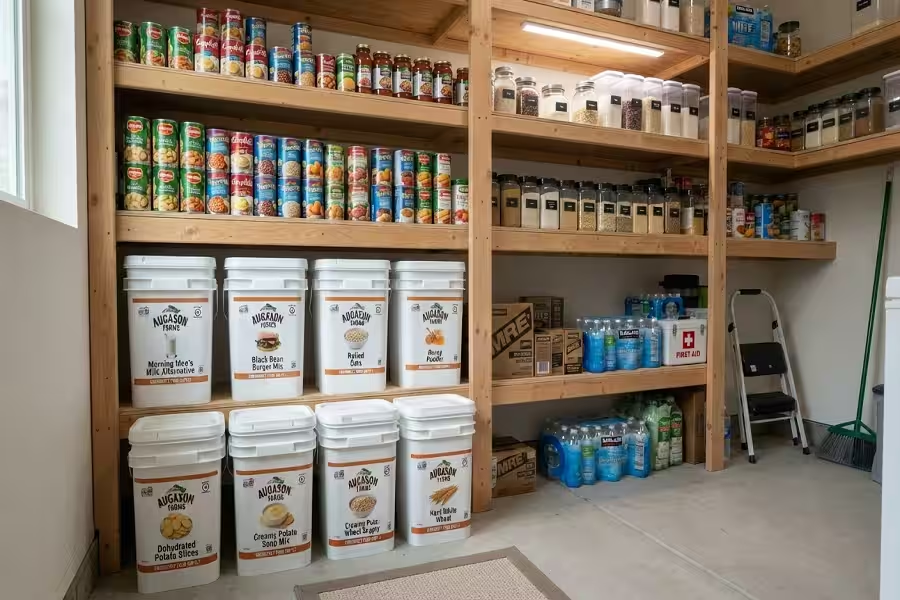
Packaging-wise, the buckets themselves are sturdy, food-grade plastic with reasonably tight-sealing lids. However, “waterproof” claims deserve a slight caveat. While the buckets resist splashes and light moisture well, they aren’t designed for full submersion, so flood-prone storage areas still require extra precautions like elevated shelving.
Stackability is a genuine strength. The uniform bucket shape makes it easy to organize multiple units in a closet, basement, or pantry corner without wasted space. Many buyers specifically mention this in reviews, noting how much simpler organization becomes compared to loose bags or boxes.
Overall, as long as you store buckets thoughtfully, away from extreme heat and standing water, you can reasonably expect these products to perform close to their advertised shelf life for decades.
9. Is Augason Farms Worth It? Pricing and Value Analysis
This is the question everyone really wants answered: is Augason Farms worth it? Let’s break down the actual numbers. A 30-Day Emergency Food Supply bucket typically runs between $60 and $75, which averages out to roughly $2.00 to $2.50 per day for a single person. That’s remarkably competitive when you consider the 25-year shelf life backing that price.
Compare that to grocery store bulk buying, where you might spend less upfront on raw rice and beans, but you’ll also need to invest in separate storage containers, oxygen absorbers, and mylar bags to hit similar shelf-life numbers. Once you factor in that extra equipment and your own time, the cost gap narrows considerably.
Additionally, convenience carries real value that’s easy to overlook. You’re not just paying for food, you’re paying for pre-portioned meals, tested recipes, and zero prep work during an already stressful situation. For many buyers, that time savings alone justifies the premium over raw ingredients.
Therefore, when comparing price against shelf life, nutrition, and convenience together, Augason Farms delivers solid value for most households. It’s not the cheapest option on the market, but it’s far from overpriced given what you actually receive.
10. Industry Perspective: Pre-Made Kits vs. DIY Bulk Storage
Here’s my honest take after years of following this industry: the “pre-made versus DIY” debate isn’t really about which option is objectively better. It’s about which trade-offs fit your lifestyle. Pre-made kits like Augason Farms win decisively on convenience. Everything arrives portioned, tested, and ready to store immediately, which matters enormously for busy families who simply don’t have time to research oxygen absorbers or calculate calorie ratios themselves.
DIY bulk storage, meanwhile, wins on cost and customization. Buying raw rice, beans, and wheat in bulk almost always costs less per calorie than pre-made kits. Plus, you control exactly what goes into your pantry, which matters for anyone managing allergies or strong food preferences. However, this route demands real time investment: sourcing containers, learning proper sealing techniques, and testing your own meal combinations before an actual emergency hits.
My honest recommendation? Don’t treat this as an either-or decision. A hybrid approach often works best. Start with a pre-made kit like Augason Farms for guaranteed baseline coverage, then supplement gradually with DIY bulk staples as your budget and storage space allow. This way, you get immediate peace of mind without waiting months to build a pantry from scratch, while still working toward the cost savings that bulk buying eventually provides. Most experienced preppers I’ve spoken with land somewhere in this middle ground rather than committing fully to one extreme.
11. Who Should Buy Augason Farms (and Who Shouldn’t)
Augason Farms makes the most sense for a few specific buyer types. First-time preppers benefit enormously from the zero-guesswork approach; you don’t need any prior knowledge to get meaningful protection immediately. Busy families also gain real value here, since the time saved on planning and portioning often outweighs the modest price premium over raw bulk ingredients.
Off-grid households and cabin owners represent another strong match. The long shelf life and simple water-only preparation make these kits ideal for locations without reliable refrigeration or complex cooking setups. Similarly, anyone building a car emergency kit or bug-out bag appreciates the compact, stackable packaging.
On the other hand, some buyers should look elsewhere. People with significant dietary restrictions, such as gluten intolerance or severe soy allergies, may struggle since many entrées contain shared ingredients that aren’t easily substituted. Extreme budget shoppers who have time to build a DIY pantry gradually will likely save more money buying raw staples separately over time.
Ultimately, if convenience and reliability rank higher than squeezing out every possible dollar of savings, Augason Farms fits well. If you’d rather invest time upfront for long-term savings and full customization, a DIY approach probably suits you better instead.
12. Frequently Asked Questions
How long do Augason Farms emergency food kits actually last?
Most kits carry a shelf life of up to 25 years when stored properly in cool, dry conditions. Individual ingredients like white rice or sugar can last even longer, while items with higher fat content may have shorter windows.
Do Augason Farms meals taste good or require complex cooking?
Flavor quality varies by dish, but most entrées receive positive feedback, especially soups and pasta meals. Preparation stays simple across the board; nearly everything requires only boiling water and a short waiting period.
Are Augason Farms kits better for short-term crises or long-term prepping?
Both, depending on which kit you choose. The 72-Hour Kit suits short-term disruptions, while the 30-Day Emergency Food Supply and bulk #10 cans work better for extended, long-term prepping scenarios.
How many calories per day do Augason Farms 30-day buckets provide?
Most 30-day buckets deliver approximately 1,800 to 2,000 calories daily per person, which aligns closely with standard emergency planning guidelines from agencies like FEMA.
Do you need to add extra water or supplies to prepare these meals?
Yes, you’ll need clean water for rehydration, plus a heat source for boiling in most cases. Basic cooking supplies like a pot and stirring utensil are also necessary.
Are Augason Farms buckets waterproof and easy to stack?
The buckets resist splashes and light moisture well but aren’t fully submersion-proof. However, their uniform shape makes stacking and organizing storage spaces genuinely easy.
Can you buy individual #10 cans instead of a whole emergency kit?
Absolutely. Augason Farms sells single #10 cans separately, allowing budget-conscious buyers to build a custom pantry gradually rather than purchasing a complete pre-assembled kit.
13. Final Verdict and Recommendation
So, after breaking down taste, nutrition, shelf life, and pricing, where does this Augason Farms emergency kit review land? Overall, this brand delivers solid, dependable value for most American households. The 25-year shelf life, reasonable calorie counts, and genuinely simple preparation make it a smart choice for beginners and busy families alike. Meanwhile, the wide product range, from complete buckets to individual #10 cans, means there’s flexibility for nearly any budget or storage situation.
Is it perfect? Not quite. Dietary restrictions and extreme budget constraints might push some buyers toward DIY alternatives instead. However, for the average household seeking reliable, no-hassle emergency preparedness, Augason Farms earns its strong reputation fairly. To learn more about standard baseline preparations and official safety recommendations, you can also review the Ready.gov Emergency Supply Guidelines.
If you’re ready to start building your emergency pantry, consider starting with a 30-Day Emergency Food Supply bucket for solid baseline coverage. From there, you can gradually supplement with bulk staples—similar to what we covered in our guide on long-term food storage organization—as your confidence and storage space grow. Either way, taking that first step toward preparedness matters far more than achieving a perfect system overnight.

Sarah Jenkins is a kitchen gear enthusiast and food preservation expert who tests and reviews containers, vacuum sealers, and home organization tools to help families keep their food fresh.